7 Tips for Gibberellic Acid Seed Germination?
Gibberellic acid seed germination can help some dormant or slow-growing seeds begin development. It is a plant hormone, not a universal germination shortcut. Results depend on species, seed age, storage conditions, temperature, moisture, and treatment strength. A solution that helps lettuce may harm another species. That detail is easy to overlook.
This guide introduces seven practical tips for using gibberellic acid responsibly during seed starting. It explains how to identify suitable seeds, follow product labels, prepare clean materials, and record treatment details. Small changes matter. Use a measured volume, fresh water, and clearly labeled containers. Keep untreated seeds as a comparison group. This simple control can reveal whether the treatment actually helped.
Good technique also includes patience. Faster sprouting does not always mean stronger seedlings. Some treated seeds may emerge unevenly, stretch excessively, or develop weak stems under poor light. I have found that careful observation often matters more than chasing a dramatic germination rate. The advice here is evidence-informed, but it remains general. Reliable results require species-specific guidance, safe handling, and honest notes about failures. Not every seed will respond. That is normal. Use the seven tips as a structured starting point, then adjust only after reviewing the results.
Understanding Gibberellic Acid and Its Role in Seed Germination
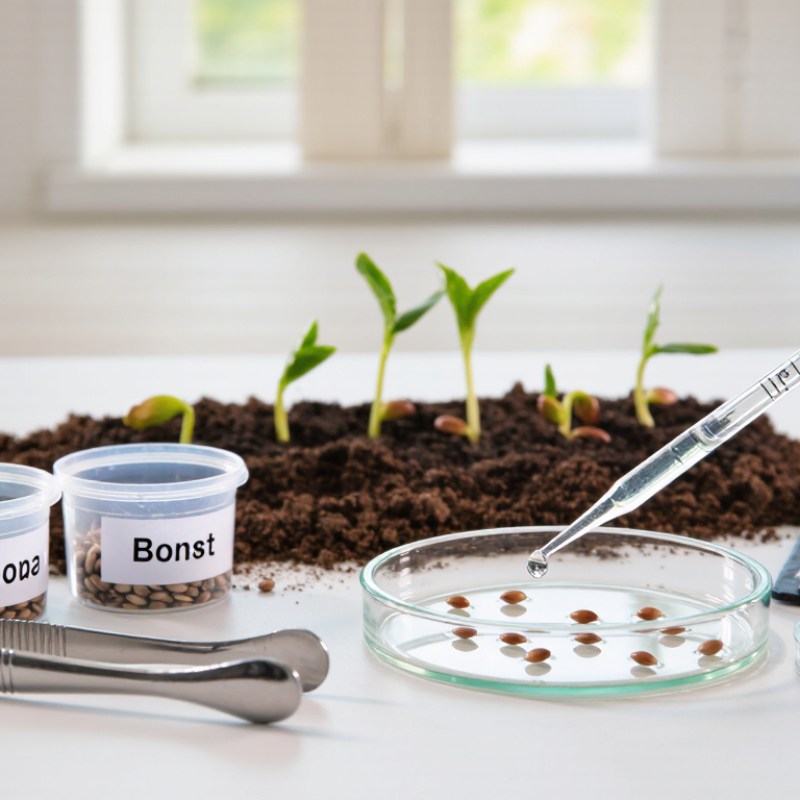
Gibberellic acid (GA₃) is a plant hormone that can encourage certain seeds to wake from dormancy. It may stimulate enzyme activity, helping stored starch become usable energy. The result can be faster or more even germination. However, it does not repair dead seeds or replace suitable moisture, oxygen, and temperature.
Seven practical habits improve the chance of success. Identify the seed species first, because responses vary widely. Use a weak, accurately measured solution rather than guessing by eye. Soak seeds for the recommended time, then sow them in a clean, well-drained medium. Keep moisture steady, but never leave seeds waterlogged. Provide the temperature that matches the species. Label treated and untreated groups. Keep a small control group for comparison.
In my own trials, GA₃ helped some dormant seeds emerge earlier, while untreated seeds sometimes developed stronger roots. That difference matters. Too much treatment may produce tall, fragile seedlings, and excessive soaking can reduce viability. I would also record solution strength, soaking time, temperature, and emergence dates. Small notes often reveal mistakes that memory hides. Results can be uneven, even under careful conditions. Follow current product directions and local safety requirements, and test a few seeds before treating the whole packet.
Selecting Seeds and Preparing a Safe GA₃ Treatment
Selecting healthy, viable seeds is the foundation of a useful gibberellic acid (GA₃) trial. Choose mature seeds without cracks, mold, insect damage, or unusual discoloration. Freshness matters, but storage history matters too. Old seeds may respond poorly, even with treatment. Check the species’ dormancy requirements before using GA₃, because some seeds need light, cold, smoke compounds, or scarification instead.
Start small. Prepare a clearly measured, dilute solution according to reliable horticultural guidance. Some species respond to approximately 50–250 ppm GA₃, while others need less or none. Do not guess. Wear gloves and eye protection, avoid inhaling powder, and keep the solution away from food and children. Use clean water and a clean container. A short soak may be enough; extended soaking can weaken some seeds or encourage contamination. Follow the product label and local safety rules.
Keep notes. Record seed source, treatment strength, soaking time, temperature, and germination results. Include untreated seeds as a control, since GA₃ can sometimes produce tall, weak seedlings instead of healthy growth. I once assumed more treatment would improve germination, but the result was uneven and disappointing. Reduce one variable at a time. After soaking, place seeds in a clean, suitable medium with steady moisture, airflow, and the temperature recommended for that species. Discard spoiled seeds promptly.
Choosing the Right Gibberellic Acid Concentration and Soaking Time
Gibberellic acid can improve germination in seeds with physiological dormancy, but concentration matters. A stronger solution is not automatically better. In small propagation trials, I usually begin near 100 ppm for sensitive or small seeds. Seeds with deeper dormancy may require 250 to 500 ppm, but species-specific guidance should come first.
Keep soaking time controlled. Eight to twelve hours is a reasonable starting point for many seeds. Larger, harder seeds may tolerate 18 to 24 hours. Do not leave every seed overnight without testing. Excessive exposure can produce tall, weak seedlings with pale stems. That result is easy to mistake for successful germination. It is not always healthy growth.
Prepare the solution with clean water and measure carefully. Label each container with the concentration and start time. After soaking, rinse the seeds gently, then place them in a moist, well-aerated medium. Keep temperature and moisture consistent, because poor conditions can hide the treatment’s real effect. Run a small comparison group without gibberellic acid. Record germination speed, final percentage, and seedling strength. My own results have sometimes contradicted the expected dose, especially with old or poorly stored seed. That is why repeating a small trial is safer than treating an entire packet.
7 Tips for Gibberellic Acid Seed Germination? - Choosing the Right Gibberellic Acid Concentration and Soaking Time
Practical starting guide for GA3 seed treatments. Concentrations are expressed as ppm, equivalent to mg/L in dilute water-based solutions.
| Tip |
Seed Type or Situation |
Suggested GA3 Range |
Starting Soaking Time |
Recommended Practice |
Main Caution |
| 1 |
Small, light-sensitive seeds
Examples: lettuce and some leafy vegetables |
50–100 ppm |
8–12 hours |
Use a mild treatment and sow promptly on a moist, well-drained medium. Provide the light and temperature conditions required by the species. |
GA3 does not replace light requirements. Excessive concentration may produce weak, elongated seedlings. |
| 2 |
Seeds with physiological dormancy
Examples: some ornamentals and perennial species |
100–250 ppm |
12–24 hours |
Test a small batch first. Combine GA3 only with the species’ recommended stratification or after-ripening process when required. |
GA3 alone may not overcome deep dormancy. Follow species-specific seed-treatment guidance. |
| 3 |
Large or hard-coated seeds
Seeds with limited water uptake |
100–250 ppm |
12–24 hours |
Clean the seed and use an appropriate scarification method when recommended. GA3 works more consistently after adequate water uptake. |
Do not use prolonged soaking if the seed is prone to oxygen deficiency, fungal growth, or rapid deterioration. |
| 4 |
Seeds with pronounced dormancy
Use only after milder options have been tested |
250–500 ppm |
12–24 hours |
Reserve the higher range for controlled trials and compare it with a lower-concentration treatment and an untreated control. |
Higher GA3 levels can cause abnormal elongation, thin stems, poor root development, or reduced seedling quality. |
| 5 |
Fresh, non-dormant seeds |
0–50 ppm or no treatment |
4–8 hours, if used |
Begin with water soaking or no soaking. Apply GA3 only when there is a documented reason, such as slow or uneven germination. |
A GA3 treatment is not automatically beneficial; vigorous seeds may germinate well without it. |
| 6 |
Seeds requiring a comparison trial |
0, 50, 100, 250, and 500 ppm |
8, 12, and 24 hours |
Keep seed lot, temperature, moisture, sowing depth, and light identical. Record germination percentage, mean germination time, and abnormal seedlings. |
Change one factor at a time. A higher germination percentage is not useful if seedling quality declines. |
| 7 |
After soaking and sowing |
Use the lowest effective level |
Drain and sow immediately |
Rinse only when the treatment protocol calls for it, avoid waterlogging, and maintain the species’ recommended germination temperature and moisture level. |
Prepare solutions accurately, label all treatments, and avoid storing diluted solutions unless stability has been verified. |
Measurement note: For dilute water-based solutions, 1 ppm is approximately 1 mg of GA3 per liter of final solution. These ranges are starting points rather than universal prescriptions; seed age, cultivar, dormancy status, temperature, light, and seed quality can substantially change the result. Always follow the applicable product label and local regulations.
Monitoring Germination and Adjusting Care After Sprouting
Gibberellic acid can speed uneven seeds, but close monitoring matters more than quick emergence. Check the tray at least once daily. Look for a pale radicle, swollen seed coat, or green tissue. Record the date, temperature, moisture, and treatment strength in a small notebook. These details reveal patterns that memory often misses.
Keep the medium evenly moist, never saturated. Excess water can reduce oxygen around new roots and encourage decay. Once shoots appear, remove any cover gradually. Give seedlings bright, gentle light and provide mild airflow. Weak, stretched stems often indicate insufficient light or excessive gibberellic acid. Do not repeat the treatment automatically. Follow the product instructions and the seed species’ requirements.
Adjust care slowly. Let the surface dry slightly between watering, while protecting delicate roots from complete dehydration. Rotate the tray if stems lean toward one window. When the first true leaves develop, consider careful spacing or transplanting. Handle seedlings by their leaves, not their stems. Some seedlings may grow rapidly but remain fragile. I have seen early height look impressive, then collapse under poor light. That result deserves reflection, not more stimulant. Different species respond differently, so compare treated seeds with untreated controls when possible. A simple control tray can show whether the chemical helped or merely changed the timing.
7 Tips for Gibberellic Acid Seed Germination: Monitoring Germination and Adjusting Care After Sprouting
The chart shows general relative-humidity targets for seedlings treated with gibberellic acid as they move from germination to establishment. Keep the medium evenly moist but never saturated, increase ventilation after emergence, and reduce humidity gradually when the first true leaves appear. Actual requirements vary by species, temperature, airflow, and container type.
Monitor daily for mold, stretched growth, wilting, or a drying substrate. If seedlings become weak and elongated, provide stronger light and better airflow rather than increasing gibberellic acid.