site_4bbb466c-cafd-4edb-8869-71ed8e60d33a
Excellence in PGR technology
Fresh Peeled Garlic is becoming a practical sourcing choice for food manufacturers, retailers, and professional kitchens. It removes peeling labor, reduces preparation waste, and supports faster production. In a busy processing room, workers can open a chilled carton, inspect clean cloves, and begin slicing immediately. That small difference can improve consistency across thousands of meals.
The market also has a strong agricultural foundation. FAOSTAT records global garlic production at more than 28 million tonnes in recent years, showing the crop’s importance in international food supply. China remains the leading producing and exporting country, according to USDA Foreign Agricultural Service reports and UN Comtrade trade data. However, production scale does not guarantee dependable quality. Fresh peeled garlic requires careful washing, trimming, temperature control, packaging, and traceability. The Codex General Principles of Food Hygiene also emphasizes preventive controls throughout the food chain.
For global buyers, the real value is not simply lower labor cost. It is predictable specification, safer handling, stable supply, and measurable delivery performance. Clove size, moisture, color, odor, shelf life, and packaging conditions should be confirmed before purchase. Supplier audits and documented cold-chain procedures matter. They are not optional details.
Still, fresh peeled products can create new risks. Improper storage may accelerate discoloration, softening, or microbial growth. A low quotation may hide higher rejection costs. This is where careful sourcing becomes essential. Buyers should compare suppliers using verified samples, inspection records, and realistic shelf-life tests. Fresh Peeled Garlic can be highly efficient, but only when convenience is supported by disciplined quality management.
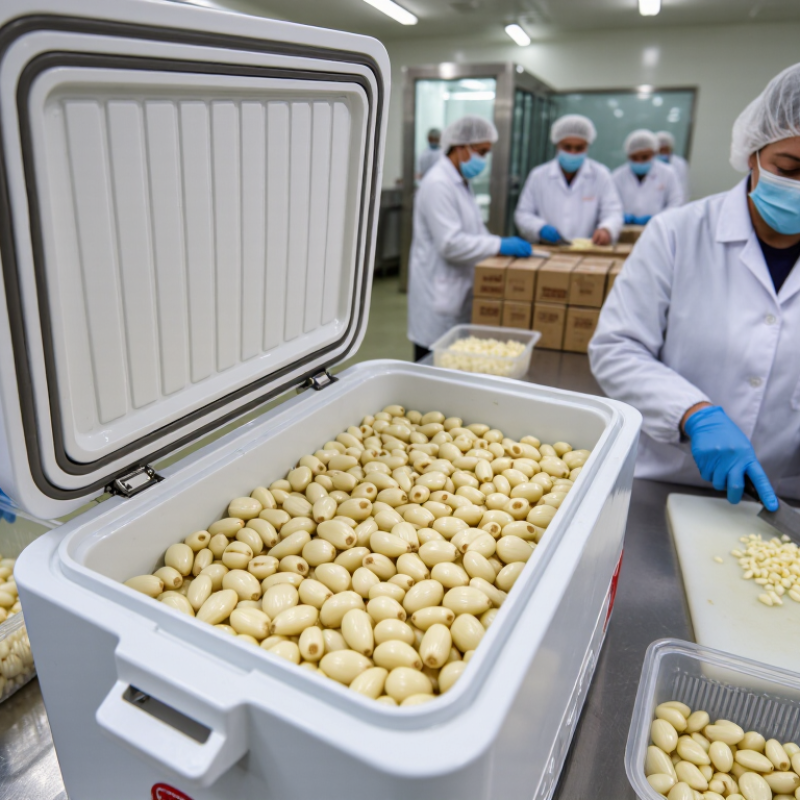
Fresh peeled garlic is a ready-to-use garlic product made from sound, mature bulbs. Workers remove the outer skin and separate individual cloves. The cloves are then trimmed, inspected, and gently washed under controlled conditions. Some processors use approved sanitizing steps, while others follow customer-specific protocols. The exact method matters.
Freshness is not only about appearance. A firm clove should have a clean ivory color, a mild garlic aroma, and no soft spots, bruising, or visible mold. After peeling, garlic loses its natural protection, so temperature control becomes critical. Processors commonly use chilled storage and sealed food-grade packaging to slow dehydration and microbial growth. Codex Alimentarius emphasizes hygienic handling, water quality, and contamination control in fresh produce operations.
The global supply is substantial. FAOSTAT recorded roughly 28 million metric tonnes of garlic production worldwide in 2022, showing why consistent preparation is essential for international buyers. Trade data from the International Trade Centre also identifies fresh or chilled garlic as a widely traded agricultural category. In practical receiving checks, buyers should review harvest timing, processing records, product temperature, and microbiological test results. Paperwork alone is not enough.
A peeled clove can look perfect and still carry handling risks. That uncomfortable detail deserves attention. Supplier audits, traceability, and cold-chain verification should support every shipment, especially when transit times vary. Even experienced teams occasionally underestimate moisture loss. That mistake can change texture before the product reaches the kitchen.
Fresh peeled garlic offers practical quality and flavor benefits for global food sourcing. Its clean, ready-to-use cloves reduce preparation time and kitchen waste. More importantly, fresh peeling can preserve a bright aroma, firm texture, and naturally sharp taste. These qualities matter in sauces, marinades, frozen meals, and prepared foods.
From sourcing experience, appearance alone is not enough. Good cloves should feel firm, show minimal bruising, and have a clean ivory surface. Strong garlic aroma is useful, but excessive softness may indicate poor handling or age. Controlled washing, hygienic peeling, and suitable packaging help protect quality during transport. Temperature management also matters. Even a short delay can affect texture and flavor. Testing should include microbial controls, residue checks, and batch traceability. Not every attractive lot performs well in production. Garlic can look excellent but lose strength after storage. That risk deserves honest evaluation.
Tips: Request samples from different harvest periods. Compare aroma immediately and after cooking. Check drip loss, clove size, peeling damage, and storage performance. Confirm the supplier’s processing records and food safety procedures. Small trials reveal problems earlier than large purchases. Document your results carefully. A simple score sheet helps purchasing teams compare suppliers fairly. Freshness is valuable, but consistency may be more important for long-term global supply.
Fresh peeled garlic helps global supply chains move faster and with fewer preparation steps. Food processors receive clean cloves ready for sauces, marinades, frozen meals, and catering packs. This reduces peeling labor, trim waste, and production delays at destination facilities. In practical sourcing, every saved step matters when labor costs and delivery windows change.
Reliable supply depends on more than appearance. Buyers should confirm clove size, moisture control, packaging strength, and refrigerated transport conditions. Lot codes and harvest records make shipment tracking clearer across borders.
Supplier audits, microbial testing, and documented sanitation procedures also support safer purchasing decisions. A stable cold chain protects texture and limits quality loss during long transportation.
Fresh does not always mean better. That assumption can fail when packaging traps moisture or transit takes too long. Experienced buyers compare shelf life, arrival temperature, and actual processing performance instead of trusting photographs. Clear specifications help both sides respond to seasonal shortages and port delays. Even small differences in peeling quality can affect machine speed and final product consistency. The process still needs review. A dependable supply chain is built through records, communication, and repeated inspection.
Why Choose Fresh Peeled Garlic for Global Sourcing?
Fresh peeled garlic can reduce kitchen labor, but importers must control safety from harvest to delivery. Choose suppliers with documented hygiene procedures, traceable batch records, and regular microbial testing. Ask how workers handle peeling, washing, and chilled processing. A clean facility matters.
Packaging protects quality during long transport. Use food-grade, sealed containers that limit moisture loss and contamination. Vacuum or modified-atmosphere packaging may extend freshness, but it requires careful validation. Too much trapped moisture can encourage spoilage. Labels should show the batch number, packing date, net weight, storage temperature, and handling instructions. Packaging damage is not a minor issue.
Tips: Inspect cartons before loading. Check for swelling, leaks, strong odors, or soft cloves. Keep the cold chain stable, usually around 0–4°C, unless the supplier specifies another validated range. Record temperatures during transit and inspect samples on arrival. Do not mix older stock with new shipments. It sounds simple. It is often missed. Importers should also confirm destination-market food requirements and retain test documents. No system is perfect, and one overlooked temperature break can change the entire shipment.
| Data Dimension | Importer Requirement | Practical Specification or Benchmark | Why It Matters | Priority |
|---|---|---|---|---|
| Product definition | Specify the product as fresh, peeled garlic cloves rather than dried garlic or processed garlic. | Whole, clean cloves with the skin removed; no visible mold, decay, excessive bruising, or foreign matter. | Clear specifications reduce disputes and prevent substitution with products having different shelf-life and handling requirements. | Standard |
| Food-safety program | Source from a facility operating a documented food-safety management system and hazard-based controls. | Supplier should maintain hazard analysis, sanitation procedures, employee hygiene controls, corrective actions, and verification records. | Peeled garlic is ready-to-use and does not normally receive a kill step before consumption. | High |
| Microbiological control | Agree on microbiological testing and acceptance criteria before shipment. | Testing should be risk-based and aligned with the destination market; commonly reviewed parameters include aerobic plate count, yeast and mold, coliforms, and relevant pathogens such as Salmonella and Escherichia coli. | Fresh peeled produce can support microbial growth when hygiene or temperature control is inadequate. | Critical |
| Temperature control | Maintain an uninterrupted refrigerated cold chain from packing through delivery. | Set product and transport conditions at approximately 0–4 °C unless the validated product specification states otherwise; prevent freezing and temperature abuse. | Low temperatures slow microbial growth and quality deterioration, while freezing can damage texture. | Critical |
| Cold-chain monitoring | Require temperature records for storage, loading, transit, and receipt. | Use calibrated data loggers or equivalent records; define an excursion procedure and acceptance limit before shipment. | Recorded temperatures provide evidence that the product remained within the agreed safety and quality range. | Critical |
| Packaging material | Use clean, food-contact-compliant packaging suitable for refrigerated fresh produce. | Packaging should be leak-resistant, strong enough for stacking, sealed against contamination, and compatible with the selected gas or vacuum process. | Peeled cloves have exposed surfaces and require more protection than intact bulbs. | High |
| Vacuum or modified-atmosphere packaging | Validate the packaging atmosphere and do not rely on packaging alone as a safety control. | Define seal integrity, gas composition where applicable, residual oxygen targets, pack size, and maximum shelf life through product validation. | Reduced-oxygen packaging can extend quality but may create additional food-safety risks if temperature and shelf-life controls are inadequate. | Critical |
| Botulism risk management | Apply a documented control strategy for reduced-oxygen packs, especially for extended refrigerated shelf life. | Use validated refrigeration, conservative use-by dating, hygienic processing, and documented hazard controls; never store garlic in oil at room temperature. | Garlic is a low-acid food, and oxygen-reduced conditions require careful control of Clostridium botulinum hazards. | Critical |
| Shelf-life declaration | Set the use-by or best-before date from documented shelf-life studies rather than a generic industry claim. | Validate shelf life under the actual pack format, temperature, sanitation conditions, and distribution time; fresh peeled garlic commonly has a much shorter life than dried bulbs. | Shelf life varies significantly with processing, packaging, temperature, and initial microbial load. | High |
| Receiving inspection | Inspect every shipment on arrival and record acceptance or rejection decisions. | Check product temperature, seal integrity, swelling, leakage, odor, discoloration, mold, texture, net weight, lot code, and remaining shelf life. | Early detection prevents unsafe or commercially unsuitable product from entering storage or distribution. | High |
| Traceability | Require one-step-back and one-step-forward traceability for each lot. | Lot records should link the raw material, packing date, processing line, supplier, shipment, destination, and applicable test results. | Traceability supports rapid withdrawal or recall if a safety issue is identified. | Critical |
| Labeling information | Confirm compliance with the importing country’s food-labeling and fresh-produce rules. | Typically include product name, net quantity, country of origin where required, packer or responsible operator details, lot identification, storage instruction, and date marking where applicable. | Correct labeling supports customs clearance, consumer protection, and product recall. | High |
| Import documentation | Review destination-specific requirements before contracting or shipping. | Depending on the market, documentation may include commercial invoice, packing list, certificate of origin, health or phytosanitary documents, treatment records, and laboratory reports. | Import controls differ by country and may change according to product form, origin, and packaging method. | High |
| Warehouse storage | Store unopened packs under refrigeration and segregate them from raw materials or chemicals that could cause contamination. | Maintain the validated temperature, protect packs from crushing and condensation, use first-expiry-first-out rotation, and keep the product away from strong odors. | Good storage protects both food safety and the sensory quality of the cloves. | High |
| Handling after opening | Define instructions for repacking, food-service use, and disposal after opening. | Keep opened product refrigerated, use clean utensils, minimize handling time, reseal where appropriate, and follow the validated post-opening use period. | Opening the package can introduce contamination and reduce the protection provided by the original seal. | High |
| Quality advantages of peeled garlic | Select peeled garlic when labor savings and ready-to-use convenience justify the tighter cold-chain requirements. | Eliminates peeling labor, supports consistent portioning, and can reduce preparation waste when supplied in suitable pack sizes. | Operational benefits can improve kitchen or manufacturing efficiency, but they do not replace refrigeration and hygiene controls. | Standard |
Note: Specifications should be confirmed against the importing country’s regulations, the approved product specification, and supplier-validated shelf-life and packaging studies.
Choosing a fresh peeled garlic supplier requires more than comparing prices. Product quality begins with the raw garlic. Ask about harvest regions, crop seasons, bulb size, and storage conditions. Traceability matters. A reliable supplier should identify each batch from farm intake to final packing.
Examine the peeling process carefully. Clean equipment, trained workers, and controlled water use can reduce contamination risks. Request recent laboratory reports for microbiological safety, pesticide compliance, moisture, and foreign-material control. Packaging should protect the cloves from crushing and temperature changes during transit. Small gaps matter.
Cold-chain management also deserves close attention. Confirm the loading temperature, transport range, expected transit time, and emergency procedures. Fresh peeled garlic can lose firmness quickly when handling is inconsistent. Ask how the supplier manages rejected lots, delayed shipments, and damaged cartons. A clear response process shows practical experience.
Global buyers should check production capacity, lead-time records, export documentation, and communication speed. A supplier may offer an attractive sample but struggle during peak demand. Ask for references or anonymized performance data when available. Request a trial order before signing a larger contract. It is not flawless. Even strong suppliers can miss a detail, so review each shipment and update specifications when evidence changes.
| Cookie | Duration | Description |
|---|---|---|
| _wpfuuid | 11 years | This cookie is used by the WPForms WordPress plugin. The cookie is used to allows the paid version of the plugin to connect entries by the same user and is used for some additional features like the Form Abandonment addon. |
| cookielawinfo-checkbox-analytics | 11 months | This cookie is set by GDPR Cookie Consent plugin. The cookie is used to store the user consent for the cookies in the category "Analytics". |
| cookielawinfo-checkbox-functional | 11 months | The cookie is set by GDPR cookie consent to record the user consent for the cookies in the category "Functional". |
| cookielawinfo-checkbox-necessary | 11 months | This cookie is set by GDPR Cookie Consent plugin. The cookies is used to store the user consent for the cookies in the category "Necessary". |
| cookielawinfo-checkbox-others | 11 months | This cookie is set by GDPR Cookie Consent plugin. The cookie is used to store the user consent for the cookies in the category "Other. |
| cookielawinfo-checkbox-performance | 11 months | This cookie is set by GDPR Cookie Consent plugin. The cookie is used to store the user consent for the cookies in the category "Performance". |
| viewed_cookie_policy | 11 months | The cookie is set by the GDPR Cookie Consent plugin and is used to store whether or not user has consented to the use of cookies. It does not store any personal data. |
| Cookie | Duration | Description |
|---|---|---|
| CONSENT | 2 years | YouTube sets this cookie via embedded youtube-videos and registers anonymous statistical data. |
| vuid | 2 years | Vimeo installs this cookie to collect tracking information by setting a unique ID to embed videos to the website. |