site_4bbb466c-cafd-4edb-8869-71ed8e60d33a
Excellence in PGR technology
Wholesale buyers rarely choose Straw Bags by appearance alone. They study weave density, handle strength, lining quality, and seasonal demand. A beautiful bag can still fail when its handles loosen after repeated sampling. Practical inspection matters.
Fashion sustainability expert Sophie Hersan has said, “The most sustainable item is the one you already own.” Her point suits this category. Buyers should seek durable designs that retailers can sell across several seasons. Natural raffia totes, woven shoulder bags, structured baskets, beach carryalls, mini bags, clutches, crossbody styles, bucket bags, satchels, and foldable shoppers each serve different customers.
This guide examines the Top 10 Straw Bag Types for Wholesale Buyers. It considers wholesale value, production consistency, packaging, comfort, and visual appeal. A palm-leaf basket may look authentic, yet its rough edges can disappoint shoppers. A compact crossbody may photograph well, but offer little usable space. Small details decide repeat orders.
Experienced buyers should request material information, production samples, measurements, color references, and stress-testing results. They should also compare stitching around handles and closures. Some assumptions will be wrong. For example, the largest bag is not always the strongest seller. Retailers may prefer medium sizes because customers use them for travel, markets, and everyday errands.
The strongest Straw Bags collections balance texture with function. They also leave room for honest improvement. Trends change quickly, while reliable construction earns trust. This overview helps wholesale buyers compare styles with clearer judgment and fewer costly surprises.
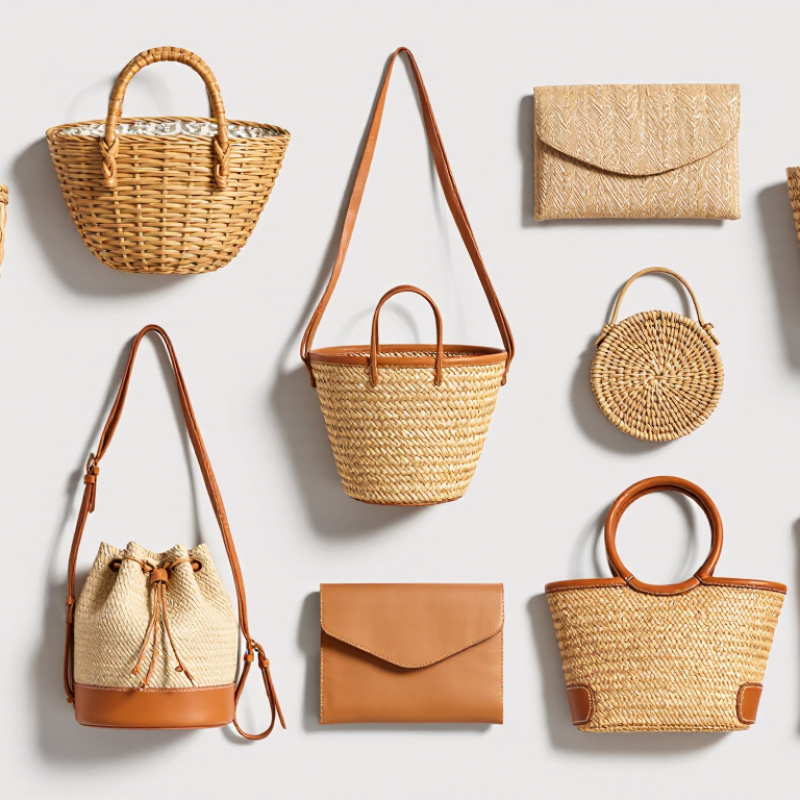
Straw bags begin with their materials. Raffia feels soft and flexible, while seagrass offers a firmer, woven texture. Paper straw is lightweight and often creates a cleaner, more uniform surface. Jute adds visible fibers and a rustic appearance. Cotton rope can soften structured designs. These materials affect weight, durability, color consistency, and shipping costs.
Shape determines the bag’s practical use. Popular wholesale options include totes, market baskets, beach bags, bucket bags, round bags, crossbody styles, clutches, satchels, mini bags, and shoulder bags. A wide tote suits towels and daily shopping. A small crossbody works better for phones and keys. Flat clutches require less storage space. Round bags attract attention, but their capacity is limited. Buyers should check handle length, lining, closure strength, and base stability before placing larger orders.
Details matter. A strong handle should withstand repeated lifting without sharp fiber ends. Even weaving usually supports better quality control, although natural materials can show slight variation. That is not always a defect. Excessive shedding is different. It may indicate weak finishing or poor storage conditions. In practical inspections, rubbing the surface with a light-colored cloth can reveal loose fibers. Measuring several samples also exposes inconsistent dimensions. I have found that attractive photos can hide uneven stitching, so sample approval should remain part of the buying process. Trends change quickly, but comfort and reliable construction still influence repeat orders.
Top Straw Bag Types for Wholesale Buyers
Wholesale buyers need straw bags that balance visual appeal, capacity, durability, and seasonal demand. Woven straw totes remain strong choices for resort shops because they hold towels, sandals, and small purchases. Basket bags offer a firmer shape and suit natural, market-style collections. Crossbody bags provide lighter everyday use, while bucket bags add volume without looking bulky. Mini bags attract trend-focused shoppers, but their limited capacity can restrict repeat sales.
Grand View Research valued the global handbags market at about USD 70.3 billion in 2023 and forecasts continued growth through 2030. This wider market signal supports a mixed straw bag assortment, rather than one oversized style. Buyers should test handle strength, lining quality, weave consistency, and closure performance before placing larger orders. Small defects become expensive at wholesale scale. Very small details matter.
Clutches can improve margin and gift-shop appeal, especially with neat embroidery or shell-free wooden accents. Straw backpacks may suit travel stores, though shoulder straps need reinforced stitching. Natural raffia, paper straw, and seagrass create different price points and textures. Textile Exchange’s Materials Market Report encourages clearer material traceability, so suppliers should document fiber sources and finishing methods. Natural fiber is not automatically low-impact. Humidity can also cause odor, warping, or mildew when storage is poor. I would avoid buying only by photographs; sample inspection often reveals uneven weaving, weak seams, or uncomfortable handles.
Indicative average wholesale prices for unbranded straw and natural-fiber bags, shown in USD per unit. Actual prices vary by material, size, construction, lining, and order quantity.
Beach totes, basket bags, and structured shoulder bags generally command higher wholesale prices because they use more material or require more complex construction. Clutches and mini bags are typically lower-cost options for entry-level assortments.
Wholesale buyers should compare more than appearance. The ten practical types include totes, shoulder bags, crossbody bags, clutches, basket bags, bucket bags, beach bags, satchels, mini bags, and straw backpacks. Fortune Business Insights valued the global handbags market at USD 73.32 billion in 2023, showing strong demand but also intense competition. A useful buying decision starts with measurable specifications.
Check the weave density, bag dimensions, net weight, handle drop, lining material, closure strength, and interior capacity. For beach styles, inspect moisture resistance and reinforced seams. For mini bags, test whether a phone and cardholder fit comfortably. Sampling experience suggests that uneven weaving often appears near corners and handle joints. That detail is easy to miss.
The Global Organic Textile Standard and Textile Exchange reports also reinforce the value of traceable materials and documented production claims. However, natural straw can vary in shade, so buyers should approve an acceptable color range before placing bulk orders.
Tips: Request three samples from different production batches. Measure each one. Record size variation, loose fibers, odor, and stitching quality. Ask for test results on colorfastness and load-bearing strength. Compare carton size, unit weight, minimum order quantity, and replacement policies. A low unit price may become expensive after defects, crushed shapes, and slow packaging. No single specification wins. Retail performance depends on matching the bag type with the customer’s use, season, and price point.
Top 10 Straw Bag Types for Wholesale Buyers
Choosing among raffia totes, seagrass baskets, paper-straw crossbody bags, and woven beach pouches requires more than attractive photos. Ask suppliers for fiber origin, weave density, lining composition, and hardware specifications. Natural straw varies in color and thickness. That is normal, but unexplained variation is not.
Textile Exchange’s Materials Market Report 2024 recorded 124 million tonnes of global fiber production in 2023. This figure reinforces the need for traceable material claims. Request harvest records, production dates, and recent inspection results. Use ISO 2859-1 sampling methods for incoming inspections. Check ten bags closely, not only one perfect sample. Look for loose ends, uneven handles, odor, weak stitching, and unstable dimensions. I have found that a polished sample can hide rushed bulk production. That lesson is easy to forget.
Customization should be tested in writing. Confirm logo placement, print method, color references, lining fabric, pocket size, closure type, packaging, and acceptable defect levels. Request a pre-production sample before approving the full order. Measure handle drop and bag weight again. Small changes affect shipping costs and customer comfort. A supplier promising every option may lack production control. Fewer choices can sometimes produce better consistency. Keep a signed specification sheet, inspection photos, and correction records. These details make supplier performance measurable, even when the first evaluation feels incomplete.
| No. | Straw Bag Type | Common Materials | Typical Construction | Indicative Wholesale Price* | Typical MOQ | Customization Opportunities | Key Quality Checks | Best Wholesale Applications |
|---|---|---|---|---|---|---|---|---|
| 1 | Round Crossbody Bag | Paper straw, raffia, seagrass, cotton or polyester lining | Rigid or semi-rigid circular body with a zipper or magnetic closure and adjustable strap | US$4.50–12.00 | 50–100 units | Diameter, woven pattern, lining color, strap material, zipper pull, woven label and hangtag | Check circular shape, even weaving, secure strap attachments, smooth edges and reliable closure operation | Summer fashion, resort shops, gift stores and online accessories collections |
| 2 | Straw Tote Bag | Raffia, paper rope, seagrass, jute or blended synthetic straw | Open-top or zip-top rectangular body with two long handles and optional inner pouch | US$5.00–15.00 | 50–100 units | Handle length, base reinforcement, lining, pocket layout, logo patch, embroidery and color combinations | Test handle load capacity, base stability, seam strength, lining attachment and resistance to loose fibers | Beachwear retailers, department stores, travel shops and everyday summer collections |
| 3 | Market Basket Bag | Seagrass, corn husk, palm leaf, raffia or natural reed | Structured basket shape, often with short handles and an unlined or cotton-lined interior | US$4.00–13.00 | 50–150 units | Basket size, handle style, leather or fabric trim, painted details, lining and woven accessories | Inspect moisture dryness, odor, splintering, handle symmetry, base strength and overall dimensional consistency | Farmers’ markets, home-and-lifestyle stores, picnic collections and promotional merchandise |
| 4 | Bucket Straw Bag | Raffia, paper straw, seagrass and cotton canvas | Rounded or tapered body with drawstring, magnetic or leather-tab closure | US$5.50–16.00 | 50–100 units | Top opening, drawstring color, base shape, shoulder strap, lining, metal fittings and logo application | Check that the opening keeps its shape, drawstring moves smoothly, bottom is reinforced and hardware is corrosion-resistant | Contemporary fashion retailers, resortwear lines and boutique accessory collections |
| 5 | Straw Clutch | Woven paper straw, raffia, jute or palm fiber with fabric lining | Flat envelope or rectangular case with flap, magnetic snap, zipper or frame closure | US$3.50–10.00 | 100–200 units | Flap shape, trim, tassels, embroidery, beadwork, wristlet strap, lining and closure hardware | Check panel alignment, edge binding, closure strength, interior capacity, abrasion resistance and absence of sharp fibers | Evening accessories, wedding favors, hotel boutiques and event merchandise |
| 6 | Straw Shoulder Bag | Raffia, seagrass, paper straw, cotton canvas and synthetic leather trim | Medium-size structured or soft body with a single shoulder strap and flap or zipper closure | US$5.00–14.00 | 50–100 units | Strap drop, body dimensions, woven logo, trim color, pocket configuration, lining and metal finishes | Evaluate strap comfort, attachment reinforcement, balanced weight distribution, closure performance and color consistency | Mass-market fashion, travel retail, seasonal collections and lifestyle gift shops |
| 7 | Mini Straw Bag | Paper straw, raffia, cotton cord or fine seagrass | Compact crossbody, top-handle or phone bag with a small interior compartment | US$2.50–8.00 | 100–300 units | Mini dimensions, novelty shapes, chain or cord strap, color blocking, charms and custom packaging | Check usable interior space, strap-to-body connection, small-part security, zipper quality and shape retention | Impulse purchases, promotional campaigns, children’s accessories and social-commerce products |
| 8 | Beach Bag | Seagrass, raffia, jute, cotton canvas or paper rope | Large open tote, often with cotton lining, inner pocket and reinforced base | US$5.50–17.00 | 50–100 units | Large-format printing, embroidery, towel loop, inner pouch, waterproof lining, handles and care labels | Test carrying capacity, handle stitching, base reinforcement, lining durability and resistance to sand and light moisture | Resort retailers, cruise shops, beach clubs, hotels and summer travel programs |
| 9 | Woven Backpack | Raffia, paper straw, cotton canvas, polyester lining and webbing | Soft or semi-structured back panel with adjustable shoulder straps, flap, drawstring or zipper | US$7.00–20.00 | 50–100 units | Back-strap length, laptop sleeve, pocket design, lining, woven badge, color palette and protective bottom panel | Check shoulder-strap adjustment, back-panel comfort, load-bearing seams, zipper durability and abrasion resistance | Travel goods, casual lifestyle stores, student accessories and eco-themed retail collections |
| 10 | Picnic or Storage Basket Bag | Seagrass, willow, palm leaf, rattan or reed with cotton fabric | Rigid basket body, hinged or removable lid, handles and optional insulated or fabric-lined interior | US$8.00–25.00 | 30–100 units | Basket dimensions, lid design, fabric lining, insulated insert, leather straps, engraving or printed labels | Inspect structural stability, lid alignment, handle load testing, fiber dryness, mildew prevention and interior finishing | Homeware stores, picnic brands, wedding styling, hospitality gifts and seasonal décor programs |
*Indicative wholesale prices are in USD per unit for standard designs ordered in bulk. Actual pricing varies by fiber type, construction complexity, lining, hardware, packaging, order quantity, labor market, shipping terms and required testing. Buyers should request pre-production samples, material specifications, inspection photos and a written quality standard before placing a bulk order.
Wholesale buyers can choose from round bags, straw totes, beach bags, crossbody styles, clutches, buckets, shoulder bags, mini bags, market bags, and structured designs. Demand changes by season and customer profile. Beach bags sell strongly before summer, while compact crossbody bags often remain useful year-round. In my buying experience, natural textures attract attention, but practical lining and secure closures influence repeat orders. Trendy shapes may create quick sales. They can also become slow stock.
Pricing should include materials, weaving labor, packaging, inland transport, customs fees, and possible quality replacements. A low factory price can mislead buyers. Thin handles, uneven stitching, or weak magnetic snaps may increase hidden costs. Compare samples carefully, not just quotations. Ask for tiered prices at 100, 300, and 1,000 units. Smaller quantities cost more per piece, yet they reduce inventory risk. My early estimates sometimes favored the cheapest option, and that was not always wise.
Logistics need equal attention. Confirm carton dimensions, bag compression limits, moisture protection, and lead times before placing an order. Straw products may lose shape when packed too tightly. Use tissue, air bags, or shaped inserts where appropriate. Request pre-shipment photos and random inspections. Also check whether colors remain consistent across production batches. A delayed seasonal shipment can erase the selling window. Buyers should leave buffer time, although predicting port delays is imperfect. That uncertainty deserves a realistic contingency budget.
| Cookie | Duration | Description |
|---|---|---|
| _wpfuuid | 11 years | This cookie is used by the WPForms WordPress plugin. The cookie is used to allows the paid version of the plugin to connect entries by the same user and is used for some additional features like the Form Abandonment addon. |
| cookielawinfo-checkbox-analytics | 11 months | This cookie is set by GDPR Cookie Consent plugin. The cookie is used to store the user consent for the cookies in the category "Analytics". |
| cookielawinfo-checkbox-functional | 11 months | The cookie is set by GDPR cookie consent to record the user consent for the cookies in the category "Functional". |
| cookielawinfo-checkbox-necessary | 11 months | This cookie is set by GDPR Cookie Consent plugin. The cookies is used to store the user consent for the cookies in the category "Necessary". |
| cookielawinfo-checkbox-others | 11 months | This cookie is set by GDPR Cookie Consent plugin. The cookie is used to store the user consent for the cookies in the category "Other. |
| cookielawinfo-checkbox-performance | 11 months | This cookie is set by GDPR Cookie Consent plugin. The cookie is used to store the user consent for the cookies in the category "Performance". |
| viewed_cookie_policy | 11 months | The cookie is set by the GDPR Cookie Consent plugin and is used to store whether or not user has consented to the use of cookies. It does not store any personal data. |
| Cookie | Duration | Description |
|---|---|---|
| CONSENT | 2 years | YouTube sets this cookie via embedded youtube-videos and registers anonymous statistical data. |
| vuid | 2 years | Vimeo installs this cookie to collect tracking information by setting a unique ID to embed videos to the website. |