Top 10 Roles of Gibberellic Acid in Plant Growth?
Gibberellic acid plays a crucial role in plant growth and development. Dr. Lisa Green, a leading expert in plant biology, emphasizes, “Gibberellic acid is essential for promoting stem elongation and influencing flowering.” This statement highlights the importance of gibberellic acid in how plants adapt and thrive.
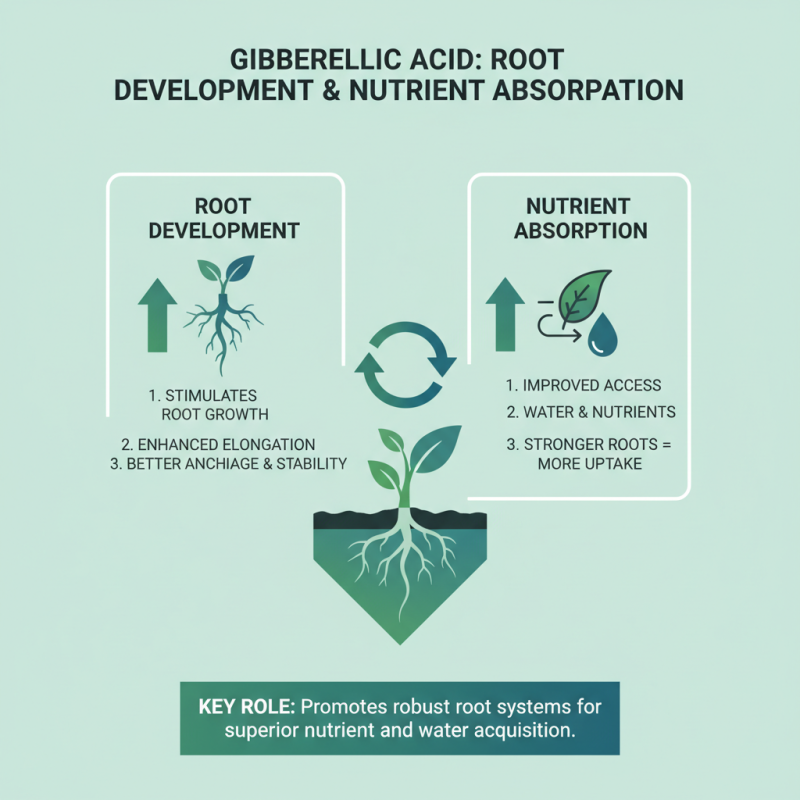
Plants utilize gibberellic acid to regulate growth processes. It triggers seed germination, enhances root development, and promotes flowering. However, its effects can vary depending on plant species and environmental conditions. In some cases, excessive gibberellic acid may lead to elongated growth or reduced fruit yield, indicating the need for balance.
Understanding the gibberellic acid role in plants is vital for improving agricultural practices. By mastering its application, farmers can optimize crop yields. Yet, it is a complex subject that requires further research and reflection. The path to harnessing gibberellic acid effectively is not without challenges.
Roles of Gibberellic Acid in Seed Germination and Dormancy Break
Gibberellic acid (GA) plays a crucial role in seed germination and breaking dormancy. This plant hormone prompts seeds to wake up after a period of inactivity. When conditions are favorable, GA accumulates, signaling the seeds to sprout. During this process, it regulates genes that are essential for growth.
In many species, seeds remain dormant until ideal conditions arise. GA helps break this dormancy by triggering biochemical changes. For instance, it can enhance enzyme activity, such as amylase, which breaks down stored starches into sugars. These sugars fuel the seed’s growth, leading to robust seedlings.
Tips: Monitor your seeds for signs of dormancy. Spatial factors, like temperature and moisture, can provide hints. If you suspect dormancy, consider treating seeds with GA to encourage germination effectively.
While gibberellic acid is powerful, it isn’t a guaranteed solution. Certain seeds may not respond as expected. Variations in seed types and environmental conditions can impact effectiveness. Testing on small batches can help gauge responses before full application. Balancing GA treatment is key for successful germination and healthy plant growth.
Top 10 Roles of Gibberellic Acid in Plant Growth
Impact of Gibberellic Acid on Stem Elongation and Plant Height
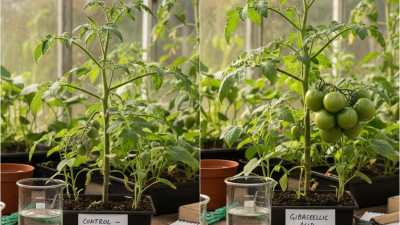
Gibberellic acid (GA3) plays a crucial role in promoting stem elongation and increasing plant height. Research indicates that GA3 can enhance growth by altering cell elongation rates, particularly in diverse plant species. According to a study by the American Society of Horticultural Science, applying GA3 resulted in a 30% increase in stem length in certain crops under controlled conditions. This effect is predominantly seen during the early growth stages when young plants are particularly responsive to gibberellins.
In addition to boosting height, GA3 influences the overall plant architecture. By affecting stem elongation, it also impacts light capture and biomass allocation. A report from the Journal of Plant Growth Regulation highlights a correlation between GA3 treatment and improved photosynthetic efficiency. However, it's not all straightforward. Excessive GA3 application can lead to weak stems and poor structural integrity. This often results in lodging, especially in cereals. Achieving the right GA3 concentration is key to maximizing benefits without compromising plant health. Striking this balance requires ongoing experimentation and adjustment based on specific plant needs and environmental conditions.
Influence of Gibberellic Acid on Flowering and Fruit Development
Gibberellic acid (GA) plays a crucial role in flowering and fruit development. It acts as a plant hormone, promoting cell elongation and influencing flowering time. Certain plants respond to GA by initiating flowering under specific environmental conditions, bridging the gap between climate and reproductive readiness. This process highlights nature's elegance in synchronizing growth with seasonal changes.
In fruit development, GA stimulates fruit growth and increases size. It affects seedless fruit development, enhancing quality and yield. However, the application of GA is not without challenges. Overuse can result in abnormal growth patterns or reduced fruit quality. Understanding the balance is vital for optimal results.
Tips: Monitor your plants closely after applying GA. Note changes in growth and flowering. Adjust your approach based on their response. Remember, every plant is unique, and responses may vary. Experimentation may lead to better understanding and use of this powerful hormone. Always seek to improve your techniques for the best yields.
Gibberellic Acid's Role in Leaf Expansion and Growth Regulation
Gibberellic acid (GA) significantly influences leaf expansion and growth regulation in plants.
Studies show that GA promotes cell elongation and division, leading to larger leaf sizes.
Research published in the Journal of Plant Growth Regulation highlights that treatment with GA can increase leaf area by up to 25% in certain species.
These changes are vital for optimizing light capture and enhancing photosynthesis.
In addition to direct growth effects, GA also plays a role in hormonal balance.
It interacts with auxins and cytokinins, balancing growth responses. A report from the American Society of Horticultural Science noted that GA application led to
improved leaf expansion while maintaining healthy plant architecture. This interplay is essential for ensuring that plants remain robust and adaptable.
Tip: To maximize the benefits of GA, consider the timing and concentration of application.
Overuse can lead to undesired stretching of stems and weakened structures. Monitoring environmental conditions will help you apply GA more effectively.
Tip: Observe your plants closely after application. Look for signs of stress or overextension. Adjust your methods based on these observations to optimize plant growth outcomes.