site_4bbb466c-cafd-4edb-8869-71ed8e60d33a
Excellence in PGR technology
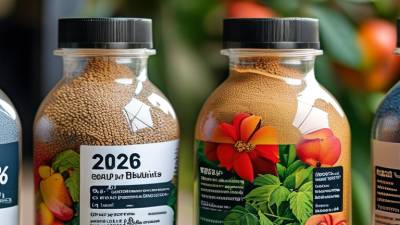
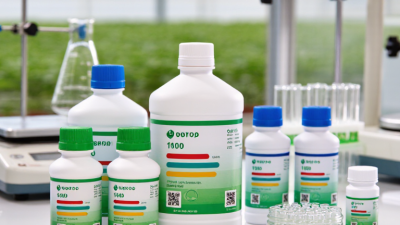
Gibberellic acid supports controlled plant growth, fruit sizing, seed germination, and flowering management. However, product performance begins with a clear and legally appropriate label. For buyers, the gibberellic acid label is not merely packaging. It is a technical document linking concentration, formulation, application timing, crop compatibility, and safe handling.
The OECD-FAO Agricultural Outlook 2023–2032 projects global agricultural production to grow by about 1.1% annually. Most growth is expected to come from productivity improvements rather than land expansion. This trend increases demand for precise crop-management tools, including plant growth regulators. The FAO Statistical Yearbook 2023 also shows agriculture remains a major global economic sector. Yet production targets do not justify careless application.
Read every field.
A reliable label should state the active ingredient concentration, formulation type, recommended crops, dosage, spray volume, application interval, and harvest waiting period. It should also identify the manufacturer, batch number, production date, storage conditions, and local registration status. FAO and WHO pesticide-management guidance emphasizes clear instructions, hazard communication, and responsible use throughout the product lifecycle. Local rules still control the final decision.
Buyers should compare the label with the certificate of analysis and the supplier’s technical data sheet. A polished label can still hide missing information. That is the uncomfortable part. Translation quality may also change practical meaning, especially around rates and timing. This guide examines the details that deserve closer review, while recognizing that one label cannot answer every crop-specific question. Professional agronomist advice and local authority verification remain essential before purchase or use.

China Best Gibberellic Acid Label Guide for Buyers?
When buying gibberellic acid, check the chemical identity before comparing prices. The label should clearly state Gibberellic Acid, GA3, and CAS 77-06-5. These details reduce confusion with other plant growth regulators. A serious label also shows the active ingredient percentage, net content, batch number, manufacturing date, and recommended storage conditions. Keep the container cool, dry, and tightly sealed.
Purity needs careful reading. “99%” may describe assay purity, while moisture or formulation additives are listed separately. Ask for a current certificate of analysis. It should match the batch number on the package. Check the test method, assay result, moisture level, and appearance. A pale powder is not proof of quality. It is only one observation. Laboratory verification remains more reliable.
Formulation type affects handling and dosage. Technical powder usually needs accurate weighing and thorough mixing. Soluble powder may dissolve faster, but clumping can signal poor storage. Liquid formulations should state GA3 concentration, solvent system, and shelf life. Do not compare one percent value with another without checking the measurement basis. That mistake is common. Labels can still be incomplete, even when they look professional. Ask for a safety data sheet and confirm applicable agricultural requirements before purchase.
Identify GA3 Correctly: CAS 77-06-5, Purity, and Formulation Type
China GA3 labels often show 20%, 40%, or 90% active ingredient. These figures describe concentration, not guaranteed field performance. A 20% formulation may be a soluble powder or liquid concentrate. A 90% grade usually describes technical material, not a ready-to-spray product. FAO/WHO pesticide specifications emphasize verifying active-ingredient identity, assay, impurities, and physical properties before purchase.
Consider the math carefully. To obtain 1 kilogram of GA3, buyers need about 5 kilograms of 20% product. A 40% grade requires 2.5 kilograms, while 90% material requires approximately 1.11 kilograms.
Cost comparisons should include formulation, packaging, shipping, and dilution losses. Numbers can mislead.
FAOSTAT reported global fruit production above 900 million tonnes in 2022, increasing attention on consistent crop-input quality. Yet concentration alone cannot explain performance. Ask for a recent certificate of analysis, batch number, assay method, solubility data, and recommended application rate.
Check the batch. Also confirm whether the label states GA3, not a mixed gibberellin product.
In practical purchasing, I have found unclear labels create more risk than modest price differences.
My earlier assumption was simple: higher percentage must be better. It is not always true. Formulation stability, storage conditions, and accurate dosing may matter more.
China Best Gibberellic Acid Label Guide for Buyers?
When reviewing gibberellic acid labels, start with concentration units. The difference between g/kg and g/L is not cosmetic. It describes concentration by mass or volume. A liquid label should state g/L clearly, while a solid product commonly uses g/kg. Check the formulation type before comparing prices or performance. Density can affect volume-based calculations, and many buyers overlook this detail.
Batch numbers deserve equal attention. A clear code should connect the container with production records, quality tests, and shipment documents. Ask for a certificate matching the exact batch, not a generic file. Net content should appear in reliable units, such as 100 mL, 1 L, or 500 g. Inspect the seal, print quality, and consistency between the label and invoice. Small mismatches matter.
Shelf life must include a manufacturing date or expiry date. Storage instructions should mention temperature, light, and closure conditions when relevant. Do not assume an unopened product remains usable forever. A clean label can still contain incomplete data. I once treated a missing density value as a minor issue; it later complicated dosage comparisons. That was avoidable. Buyers should also check required local registration details and contact information before importing or distributing the product. Good documentation is practical evidence, not decoration.
| Audit Dimension | What the Buyer Should Check | Correct Label Format or Reference Data | Audit Decision |
|---|---|---|---|
| Active ingredient name | Confirm that the label identifies the active substance clearly and does not use only an abbreviation. | Gibberellic acid; commonly identified as gibberellic acid A3 or GA3 where permitted by the applicable regulatory system. | Pass when the chemical identity is unambiguous. |
| Formulation type | Check whether the product is a soluble powder, water-dispersible granule, soluble concentrate, or another formulation. | Examples of recognized formulation descriptions include SP, WDG, and SL; the formulation code must agree with the registration and technical documents. | Pass when the formulation description is consistent across the label and COA. |
| Active content in solid products | For powders and granules, verify that the concentration is expressed by mass. | 20% w/w = 200 g/kg Calculation: 20 ÷ 100 × 1,000 = 200 g/kg. |
Pass when the percentage and g/kg value are mathematically equivalent. |
| Active content in liquid products | Confirm whether the liquid concentration is stated as mass per volume and identify the reference temperature if required by local rules. | 4% w/v = 40 g/L Calculation: 4 g per 100 mL × 10 = 40 g/L. |
Pass only when the label explicitly defines the basis as w/v or g/L. |
| Unit consistency | Ensure that g/kg is not substituted for g/L, and that a percentage is not converted without knowing whether it is w/w, w/v, or another basis. | Acceptable entries should state the basis, such as 200 g/kg active ingredient or 40 g/L active ingredient. | Hold for clarification if the concentration basis is missing. |
| Batch or lot number | Check that the batch number is printed or permanently marked and matches the certificate of analysis, invoice, and shipping documents. | Record the exact manufacturer-issued code, including letters, numbers, hyphens, and leading zeros. Do not replace it with an internal purchase-order number. | Pass when the same code appears on the container and COA. |
| Manufacturing date | Verify that the date is clearly distinguished from the expiry date and uses an unambiguous format. | Preferred format: YYYY-MM-DD, for example 2026-04-15, if accepted by the destination market. | Pass when the date can be read without regional ambiguity. |
| Shelf life | Confirm the stated shelf life, storage conditions, and whether the expiry date is calculated from the manufacturing date. | A valid label should state a manufacturer-supported period, such as 24 months from the manufacturing date, or provide a specific expiry date. | Do not infer shelf life when no validated period is printed. |
| Net content | Check that the quantity refers to product content, not packaging weight, and that the unit matches the formulation. | Solid product example: Net content: 1 kg Liquid product example: Net content: 1 L |
Pass when the quantity is clearly visible and consistent with shipping documents. |
| Storage conditions | Look for instructions that protect the product from moisture, excessive heat, direct sunlight, and unauthorized access. | Typical wording: Store in the original tightly closed container in a cool, dry, well-ventilated place away from direct sunlight. | Pass when storage instructions are specific and legible. |
| COA verification | Compare the active-content result, batch number, manufacturing date, and test date with the label. | The COA should identify the same batch and report an active-content result against a defined specification, such as a minimum assay requirement. | Pass only when the COA is batch-specific and traceable. |
| Regulatory and language information | Confirm that the label meets the destination country’s pesticide, plant-growth-regulator, language, hazard, and import requirements. | Required registration numbers, hazard statements, first-aid instructions, permitted uses, and languages depend on the destination jurisdiction. | Obtain local regulatory confirmation before purchase or use. |
Note: Concentration examples are unit-conversion references, not company or brand product claims. The applicable registration, label requirements, assay specification, shelf life, and permitted uses must be confirmed for the destination market and the specific batch.
When checking a gibberellic acid label, match the crop before reviewing the dose. Labels may state rates as grams per hectare, milligrams per litre, or millilitres per 100 litres of water. These units are not interchangeable without careful calculation. Confirm the product concentration, spray volume, and actual treated area. A tank rate can look correct while covering twice the intended acreage.
Timing matters as much as dose. Directions may specify flowering, fruit set, sizing, or pre-harvest application. Record the crop stage, application date, weather, and water volume. The pre-harvest interval, or PHI, tells you the minimum waiting period before harvest. Never assume one crop’s PHI applies to another. If the label is unclear, pause and contact a qualified local agronomist or the relevant agricultural authority. I still recheck these details.
Tips: Photograph the label before mixing. Convert all units to one system. Calculate the treated area, not the total farm size. Check whether repeated applications have separate limits. Avoid copying advice from another region, because approved directions and PHIs can differ. Small errors matter. A written field record improves traceability and helps reveal whether the timing, coverage, or dose needs reconsideration.
A compliant label should be checked against documents, not appearance. For China-sourced gibberellic acid, request the current China registration number and verify its scope, formulation, crop, and approved use. A registration number alone is insufficient. China’s pesticide registration framework separates product identity from permitted application. The label should match the registration record exactly. Check the active ingredient content, batch number, production date, net weight, and responsible manufacturer.
Ask for an SDS under the latest GHS-based format. It should describe hazards, handling, storage, transport, and emergency measures. Then compare the COA with the shipment. Confirm assay, moisture, impurities, appearance, test method, laboratory date, and batch number. FAO and WHO pesticide specification guidance stresses validated methods and defined impurity limits. A polished COA can still hide weak traceability. I would request an independent laboratory test for a first order.
Tips: Treat MRL status as destination-specific. Check China’s GB 2763 database, Codex MRL records, and the importing country’s official pesticide database. Codex does not automatically authorize use in every market. Some databases show no established MRL, which is not the same as “zero residue allowed.” Ask the supplier for the exact legal basis and a recent residue trial report. USDA’s Pesticide Data Program and EFSA residue assessments also show why sampling and analytical limits matter. Documentation may look complete, but one missing crop or formulation detail can change the compliance decision.
| Cookie | Duration | Description |
|---|---|---|
| _wpfuuid | 11 years | This cookie is used by the WPForms WordPress plugin. The cookie is used to allows the paid version of the plugin to connect entries by the same user and is used for some additional features like the Form Abandonment addon. |
| cookielawinfo-checkbox-analytics | 11 months | This cookie is set by GDPR Cookie Consent plugin. The cookie is used to store the user consent for the cookies in the category "Analytics". |
| cookielawinfo-checkbox-functional | 11 months | The cookie is set by GDPR cookie consent to record the user consent for the cookies in the category "Functional". |
| cookielawinfo-checkbox-necessary | 11 months | This cookie is set by GDPR Cookie Consent plugin. The cookies is used to store the user consent for the cookies in the category "Necessary". |
| cookielawinfo-checkbox-others | 11 months | This cookie is set by GDPR Cookie Consent plugin. The cookie is used to store the user consent for the cookies in the category "Other. |
| cookielawinfo-checkbox-performance | 11 months | This cookie is set by GDPR Cookie Consent plugin. The cookie is used to store the user consent for the cookies in the category "Performance". |
| viewed_cookie_policy | 11 months | The cookie is set by the GDPR Cookie Consent plugin and is used to store whether or not user has consented to the use of cookies. It does not store any personal data. |
| Cookie | Duration | Description |
|---|---|---|
| CONSENT | 2 years | YouTube sets this cookie via embedded youtube-videos and registers anonymous statistical data. |
| vuid | 2 years | Vimeo installs this cookie to collect tracking information by setting a unique ID to embed videos to the website. |