site_4bbb466c-cafd-4edb-8869-71ed8e60d33a
Excellence in PGR technology
Buying Chaga Powder internationally requires more than comparing prices and glossy product photos. Buyers need clear evidence of identity, origin, processing, and batch consistency. A supplier may describe wild-harvested Chaga from northern forests, but that claim should be supported by traceability records and verifiable documentation.
This guide reviews seven Chaga Powder suppliers for global buyers, focusing on practical sourcing factors. These include laboratory testing, production capacity, packaging quality, communication, and export experience. Reliable suppliers should provide recent certificates of analysis, showing results for heavy metals, pesticides, microbial contamination, and other relevant risks. They should also explain whether the powder is raw, dried, extracted, or blended. Small details matter. A sealed sample bag, readable lot number, and stable color can reveal more than a polished website.
No supplier is perfect. Product data may be incomplete, and testing standards can differ between countries. That is where careful questions become essential. Buyers should confirm botanical identity, harvesting permissions, minimum order quantities, shelf life, storage conditions, and destination-market requirements. Import rules may vary widely, so professional customs or regulatory advice remains valuable. This article avoids medical promises and evaluates suppliers as commercial partners, not health authorities. The strongest options combine transparent documentation with realistic lead times and responsive support. Still, every buyer should conduct independent due diligence before placing an order. A ranking can guide research, but it cannot replace sample testing, contract review, or local compliance checks.
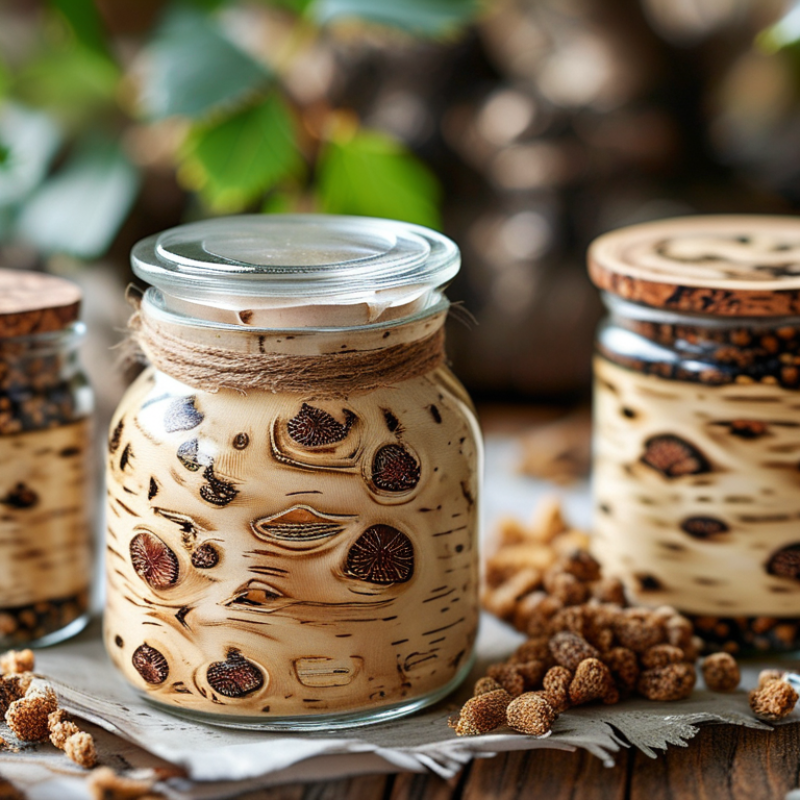
Chaga supply is expanding, but published market estimates differ sharply by definition. Future Market Insights projects strong growth for the global Chaga mushroom market through 2034, with a high-single-digit CAGR. Grand View Research reports similar momentum across the broader medicinal mushroom sector. These figures include powders, extracts, supplements, and functional food applications. The categories are not identical.
Demand signals are visible in purchasing details. Importers increasingly request organic documentation, origin records, moisture results, and heavy-metal testing. They also ask for beta-glucan levels and extraction ratios. Those requests show a shift from low-cost bulk buying toward verified specifications.
Powder remains practical for beverage mixes and capsules. Fine particles, earthy aroma, and stable color matter during production. Small, sealed samples often reveal more than polished sales claims.
For global buyers, supplier screening should include harvest region, drying temperature, microbial results, and lot traceability. A current certificate of analysis is essential. It should match the shipped batch, not an old sample. Some reports may overstate growth because market boundaries remain unclear. That deserves reflection. CAGR is useful, but it cannot prove future supply reliability. Buyers should compare three-year pricing, lead times, minimum order quantities, and replacement policies before signing contracts. Weather, forest access, and processing capacity can change availability quickly.
7 Best Chaga Powder Suppliers for Global Buyers
Quality starts with measurable evidence, not attractive packaging or confident sales language. For chaga powder, buyers should request the β-glucan content for every production batch. The report should identify the testing method, sample number, production date, and laboratory. A high percentage may look impressive, but the method can affect the result. Compare like with like. Ask for supporting information about botanical identity, particle size, and extraction history.
Moisture should remain at 10% or below. Excess moisture can encourage clumping, shorten shelf life, and complicate storage during international transport. Open a sample and check its texture. It should feel dry and flow easily, not form damp lumps. A complete COA should also cover heavy metals, microbiological limits, pesticides where relevant, and unauthorized additives. It should match the shipped lot, not an old sample. That detail matters.
A COA is useful, not magic. During supplier reviews, I would verify the laboratory’s contact details and confirm whether results came from an independent facility. One weakness in my early evaluations was trusting polished documents too quickly. Now, I compare the COA with the product label, batch code, and purchase sample. Small mismatches deserve questions. Reliable suppliers answer clearly, provide traceable records, and accept reasonable third-party testing. Availability matters, but consistency matters more.
Global chaga powder demand is expanding with the functional mushroom sector. Grand View Research valued that sector at over USD 30 billion in 2023. IMARC also identifies supplements and beverage mixes as major growth areas. The figures below are indicative sourcing benchmarks, not fixed offers.
Data sources: Grand View Research, Functional Mushroom Market Report, 2024; IMARC Group, Functional Mushroom Market Report, 2024.
When comparing seven Chaga powder suppliers, compliance should guide the shortlist. GMP controls production hygiene, batching, sanitation, and documented deviations. ISO 22000 adds a certified food-safety management system across supplier operations. Check the certificate scope, factory address, expiry date, and independent certification body. A logo alone proves little.
HACCP records should identify hazards from harvesting through milling and packing. Ask for the latest hazard analysis, corrective-action logs, and lot-specific traceability records. The World Health Organization estimates that unsafe food causes 600 million illnesses and 420,000 deaths annually. That figure explains why preventive controls matter, even for dried mushroom powders. Small gaps can become expensive recalls.
Heavy-metal testing needs closer attention. Chaga may absorb contaminants from soil, roads, or industrial areas. Request an independent COA using ICP-MS, with results for lead, cadmium, mercury, and arsenic. Compare results with the destination market’s limits, such as those set under applicable EU food-contaminant rules or national FDA guidance. There is no single global limit for every botanical matrix.
This is where supplier claims often become vague. Review sampling dates, laboratory accreditation, detection limits, and the exact lot number. FAO and WHO food-safety assessments repeatedly stress exposure-based risk evaluation, not attractive compliance language. I would also question a perfect report with no raw data. Reliable suppliers can explain failures, retesting, and corrective action without hesitation.
7 Best Chaga Powder Suppliers for Global Buyers
A useful buyer scorecard should rank evidence, not attractive product pages. Ask each supplier for current organic, GMP, HACCP, or ISO certificates. Confirm the certificate holder, facility address, scope, and expiry date. A certificate copied from an old shipment proves very little. Keep that doubt.
Incoterms can expose hidden costs. Compare FOB, CIF, and DDP quotes carefully. Confirm who handles export documents, insurance, customs clearance, and destination charges. Request a written lead-time range, not only an ideal delivery date. Small details matter. A clear pro forma invoice should match the contract and packing list.
Testing needs more than a single laboratory report. Request batch-specific results for moisture, heavy metals, pesticides, microbiology, and identity. Ask whether the laboratory uses recognized methods and independent accreditation. Review the sample before approving production. Chaga powder can vary in color, mesh size, and moisture after grinding. Supply risk also deserves a score. Check harvest regions, backup suppliers, storage conditions, and annual capacity. Ask how the supplier manages weather, transport delays, and raw-material shortages. A low price may hide fragile sourcing. The strongest supplier may not score highest in every category, and that is acceptable. Record weaknesses openly, then decide which risks your business can actually absorb.
Anonymized supplier comparison for procurement screening. Scores are based on documentation readiness, export practicality, testing coverage, and supply-continuity indicators.
| Supplier ID | Primary Sourcing Region | Product Specification | Certification & Documentation Readiness | Routine Testing Evidence | Typical Incoterms | MOQ / Lead Time | Supply Risk | Buyer Score |
|---|---|---|---|---|---|---|---|---|
| Supplier 01 | Northern Europe | Wild-harvested Chaga powder; mesh 80; dark brown powder; hot-water extraction option | Strong HACCP or ISO 22000 evidence; traceability records; organic status subject to destination-market verification | Batch COA covering microbiology, heavy metals, moisture, ash, and pesticides; request species identification and beta-glucan method | FCA, FOB, CIF, DAP | 25–100 kg 3–5 weeks | Low–Medium | 91 |
| Supplier 02 | Canada | Wild-harvested Chaga powder; mesh 60–100; whole-mushroom powder and extract grades | Strong GMP/HACCP documentation; harvest-area records; allergen and foreign-material controls required | COA normally requested for total plate count, yeast and mold, E. coli, Salmonella, heavy metals, pesticides, and moisture | EXW, FCA, FOB, CIF | 50–200 kg 4–7 weeks | Low–Medium | 89 |
| Supplier 03 | Eastern Europe | Wild-harvested Chaga powder; mesh 80; conventional grade; private-label packing available | Moderate HACCP documentation commonly available; verify certificate scope, audit date, and chain-of-custody records | Microbiology and heavy-metal testing expected; pesticide and authenticity testing should be added to the purchase specification | FCA, CPT, CIP, DAP | 100–300 kg 4–6 weeks | Medium | 84 |
| Supplier 04 | Finland / Baltic region | Organic-positioned Chaga powder; mesh 60; low-temperature milling; natural, untreated material | Strong Organic certificate should match product scope and packing site; HACCP or ISO 22000 evidence recommended | COA with microbiology, heavy metals, pesticide residues, moisture, and foreign-material inspection; verify organic integrity controls | FCA, FOB, CIF, DDP by quotation | 25–100 kg 3–6 weeks | Low | 93 |
| Supplier 05 | China, northern growing areas | Cultivated or mixed-origin Chaga powder; mesh 80; standard and extract grades | Moderate GMP, HACCP, or ISO documentation may be available; confirm actual production site and certificate validity | COA generally includes microbiology, heavy metals, pesticide residues, moisture, and solvent residues for extracts; require independent verification | EXW, FOB, CFR, CIF | 100–500 kg 4–8 weeks | Medium | 82 |
| Supplier 06 | Russia / Central Eurasia | Wild-harvested Chaga powder; mesh 60–80; bulk industrial grade; origin documentation essential | Limited Request HACCP/GMP evidence, legal export documentation, harvest permits, and a documented chain of custody | Require third-party testing for microbiology, heavy metals, radionuclides where relevant, pesticides, moisture, and species authenticity | FCA, CPT, CIP subject to route and sanctions compliance | 100–500 kg 6–12 weeks | High | 74 |
| Supplier 07 | United States | Wild-harvested or cultivated Chaga powder; mesh 60–100; retail-ready and bulk formats | Strong FDA facility registration may apply; HACCP/GMP evidence, allergen statement, and lot traceability should be available | COA commonly requested for microbiology, heavy metals, pesticides, moisture, and beta-glucan or polysaccharide content | EXW, FCA, FOB, DAP | 25–200 kg 2–5 weeks | Low–Medium | 88 |
| Cookie | Duration | Description |
|---|---|---|
| _wpfuuid | 11 years | This cookie is used by the WPForms WordPress plugin. The cookie is used to allows the paid version of the plugin to connect entries by the same user and is used for some additional features like the Form Abandonment addon. |
| cookielawinfo-checkbox-analytics | 11 months | This cookie is set by GDPR Cookie Consent plugin. The cookie is used to store the user consent for the cookies in the category "Analytics". |
| cookielawinfo-checkbox-functional | 11 months | The cookie is set by GDPR cookie consent to record the user consent for the cookies in the category "Functional". |
| cookielawinfo-checkbox-necessary | 11 months | This cookie is set by GDPR Cookie Consent plugin. The cookies is used to store the user consent for the cookies in the category "Necessary". |
| cookielawinfo-checkbox-others | 11 months | This cookie is set by GDPR Cookie Consent plugin. The cookie is used to store the user consent for the cookies in the category "Other. |
| cookielawinfo-checkbox-performance | 11 months | This cookie is set by GDPR Cookie Consent plugin. The cookie is used to store the user consent for the cookies in the category "Performance". |
| viewed_cookie_policy | 11 months | The cookie is set by the GDPR Cookie Consent plugin and is used to store whether or not user has consented to the use of cookies. It does not store any personal data. |
| Cookie | Duration | Description |
|---|---|---|
| CONSENT | 2 years | YouTube sets this cookie via embedded youtube-videos and registers anonymous statistical data. |
| vuid | 2 years | Vimeo installs this cookie to collect tracking information by setting a unique ID to embed videos to the website. |